2025 NSF Unidata Community Assessment Survey: Key Findings
Between April and June 2025, NSF Unidata conducted a comprehensive community assessment survey to understand the Earth Systems Science (ESS) community's needs, challenges, and priorities from both organizational and personal perspectives. The 334 responses provide valuable insights into how NSF Unidata can better serve researchers, educators, students, and other professionals. We’re grateful to everyone who participated and shared their insights. Your input is shaping how we support the Earth system science community in the years ahead.
It’s worth noting that most respondents to our survey are familiar with NSF Unidata or a tool of the program, representing a subset of the broad ESS community. Additionally, while we had the highest participation rate in two decades, our survey sample is small compared to the number of individuals who use NSF Unidata software and data services. We look at these results as indicators of community needs and sentiment, rather than as statistically significant findings. Note also that not every question was required; as a result, in the charts presented here the proportion of respondents selecting each option is more interesting than the total number.
Who Participated
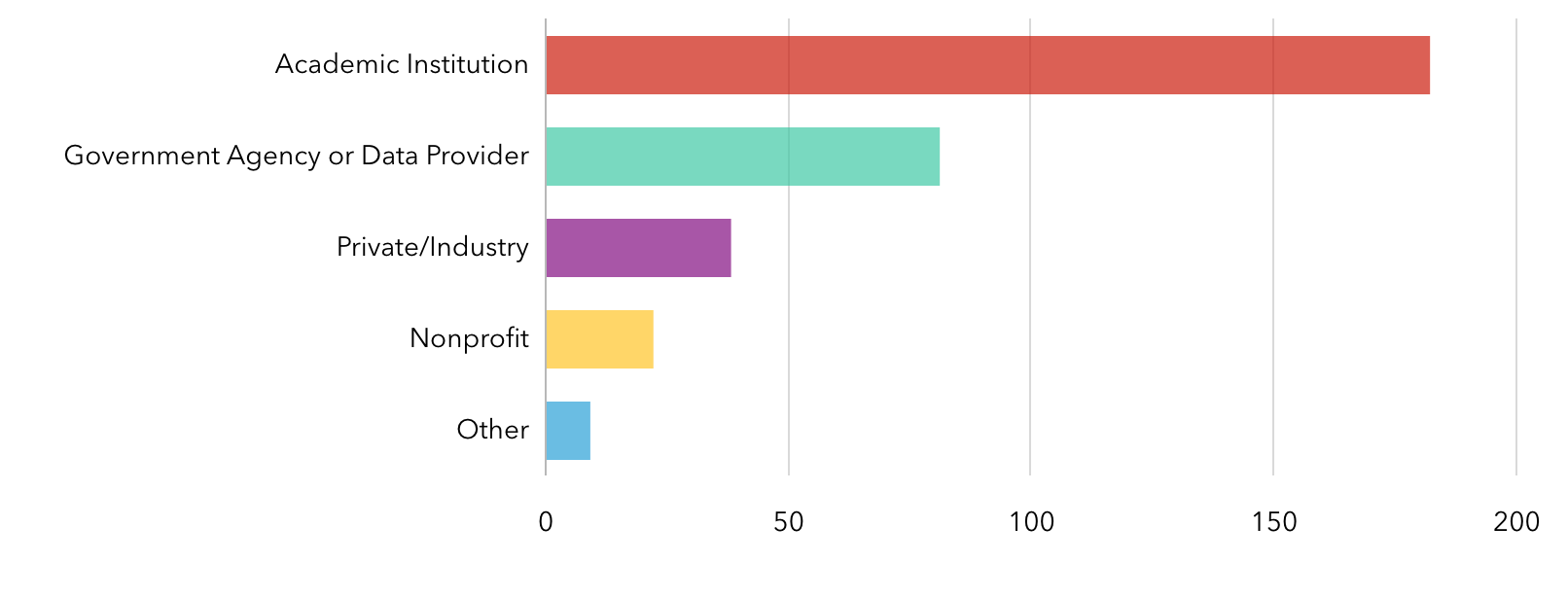
Survey respondents primarily came from academic institutions (~55%), with those from a government agency or data provider making up the second largest group (~24%). Interestingly, the proportion of respondents from the latter was proportionately higher than in our last survey conducted in 2021 (11%), and respondents from the private sector (11%), which in our previous survey (2021) was roughly the same as the respondents from the public sector (16%), was a bit lower.
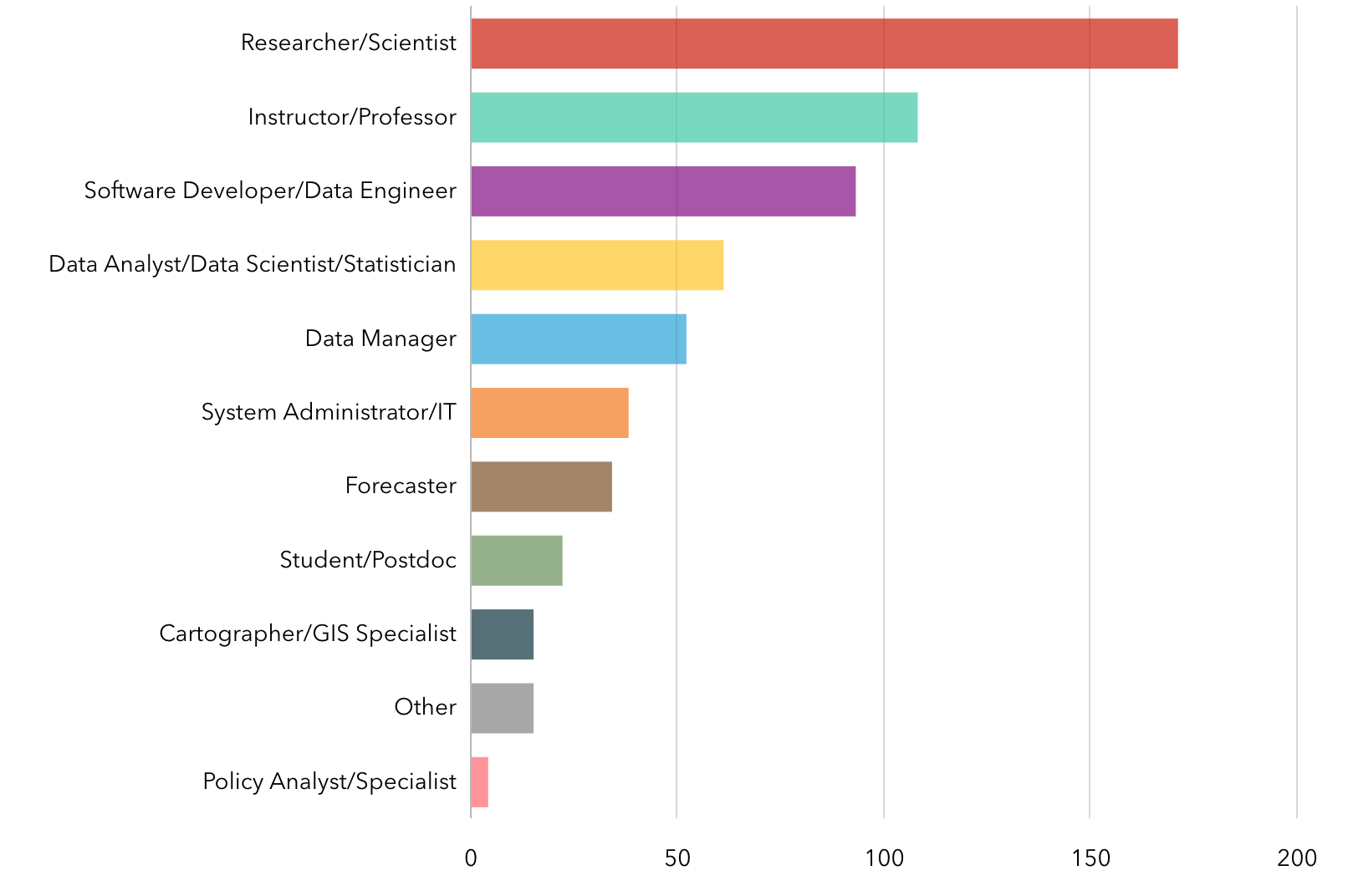
Sorting respondents by their self-identified job category also provides interesting insights. Seeing researchers/scientists (~51%) and instructors/professors (~32%) at the top of this list is unsurprising, but the grouping of data-centric job classifications (data engineer/analyst/manager) near the top suggest that NSF Unidata’s emphasis on data management and “analysis ready” data has not been wasted.
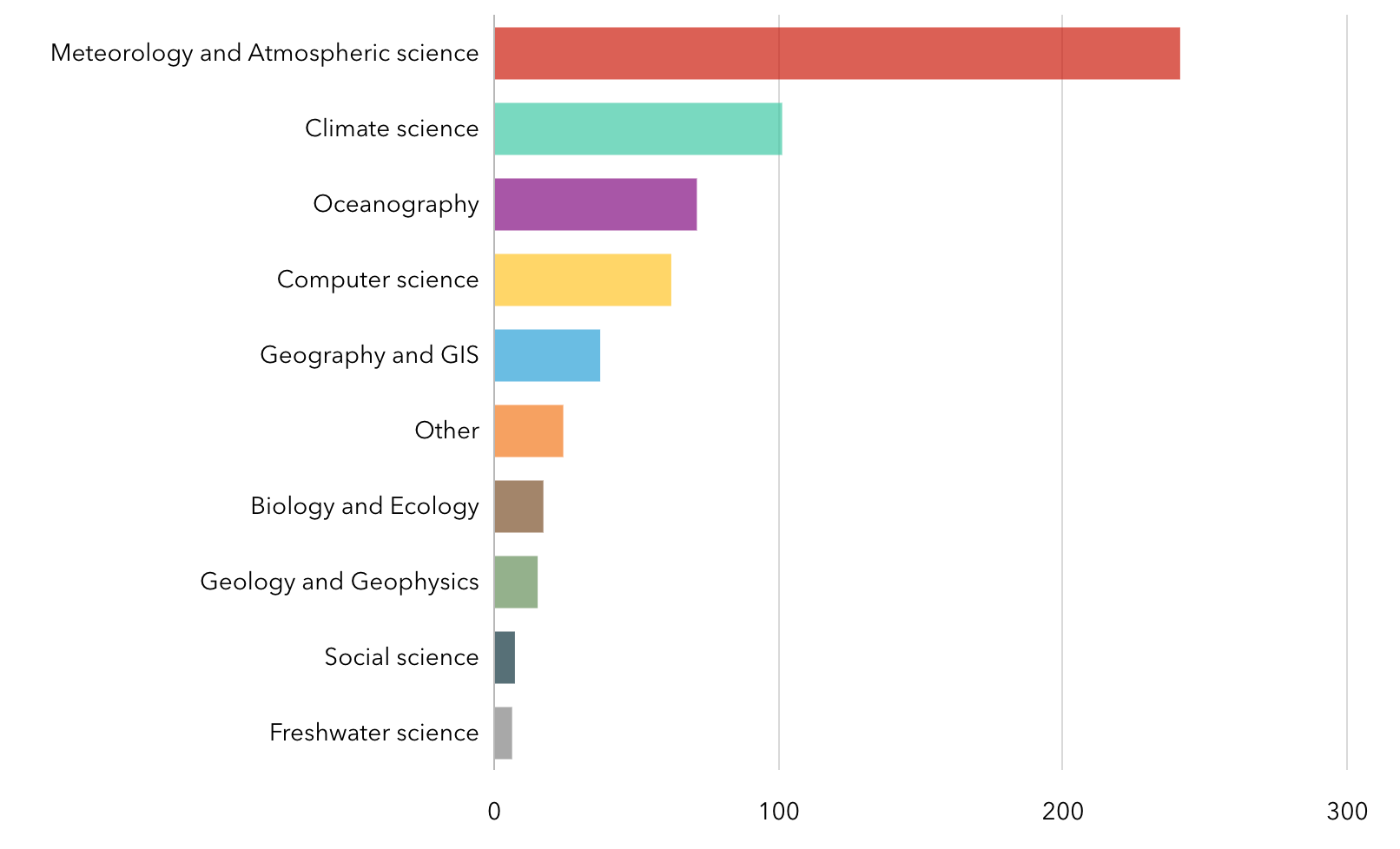
Looking at respondents’ primary academic discipline, NSF Unidata’s historical focus on tools and data for atmospheric science continues to mean these disciplines accounted for the largest percentage of survey respondents (~72%). It is encouraging, however, to notice that respondents represented many disciplines that are not centered on atmospheric processes.
What we Learned
Organizational Priorities
Our survey began by asking respondents to rank a set of areas noting the priorities within their institutions in the near- to medium-term (1-4 years). The relevant areas of activity were Research, Data Management and Engineering, Education and Workforce Development, Research to Operations, and Community Engagement.
Here, we found that while organizational priorities varied by sector, nearly 70% of all respondents identified research as a top institutional focus. Academic respondents strongly prioritized research (~84%) and workforce development (~63%), those in government prioritized research (~61%) and research-to-operations activities (~61%), and respondents from private industry prioritized data management and engineering (~68%).
In keeping with NSF Unidata’s longstanding focus on academic sector research and education needs, it’s interesting to note respondents’ rankings of specific activities in these areas.
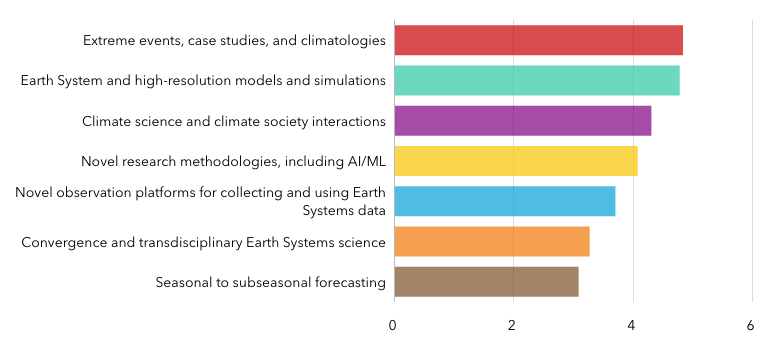
Research priorities spanned a range of activities, with extreme events, Earth system modeling, and climate science as the most important research topics. These observational data and environmental modeling use cases are in alignment with traditional strengths of NSF Unidata.
Data management and data engineering ranked as the second highest priority overall for organizations, (~51%), and respondents across all sectors emphasized the importance of handling and analyzing big data as well as prioritized sharing data, and using data standards and metadata conventions. Non-academic communities particularly valued web-based visualization platforms and tools.
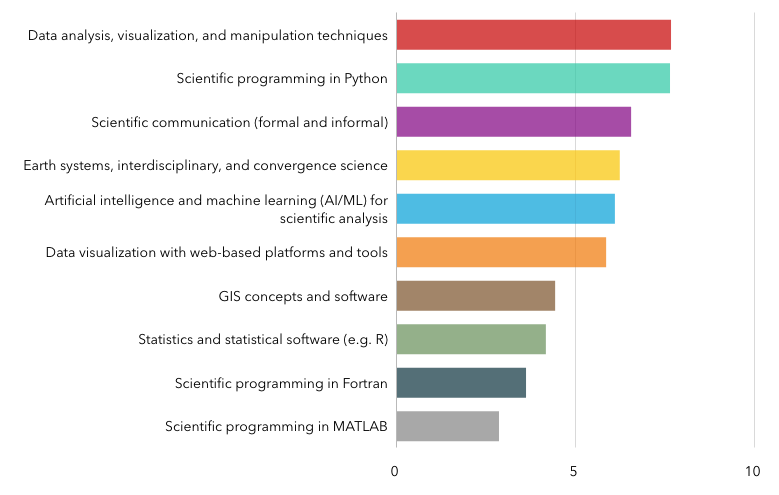
Educational priorities also encompassed several different topics, with data analysis and visualization and scientific programming in the Python language leading the list.
Individuals’ Priorities
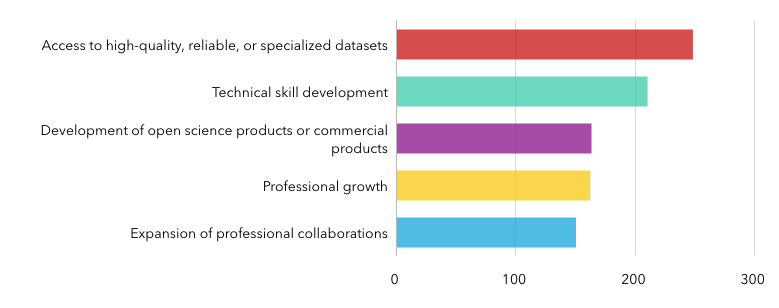
Asked about their personal work priorities over the next 1-4 years, approximately 74% of respondents prioritized access to high-quality, specialized datasets. Technical skill development was identified as the second highest personal work priority for ~63% of respondents and in alignment with organizational priorities, with improving programming skills, data visualization capabilities, and learning the python ecosystem as the most needed competencies. Professional advancement depended on tools and collaboration with ~49% seeking growth and ~45% wanting to expand networks, with particular emphasis on finding funding, leadership roles, and cross-sector opportunities.
Additional Priorities
When respondents were given the opportunity to expand on priorities not represented in the survey, they noted these top three priority organizational themes: data accessibility and cloud-ready infrastructure, interdisciplinary integration, and public engagement and science communication. The additional personal priorities noted included: web-based, modernized tools, data standards, compatible and higher performance data infrastructure, and unified platforms and support for collaboration, tool adoption, and support.
Current Data and Tools Ecosystem
The most helpful resources and capabilities identified by respondents were tools for visualizing and exploring data (76%), access to code samples (71%), and comprehensive documentation (66%). Respondents favored tools supporting programmatic workflows, real-time data integration, and flexibility to work with diverse data sources.
Examined within the context of NSF Unidata’s offerings, respondents appear to depend most heavily on the Program’s data access mechanisms and technical training/education programs. With the highest adoption success for netCDF, THREDDS data server, and MetPy. It is also notable that many respondents indicated that developing scientific tools (in either an open-source or commercial environment) was a high priority.
Challenges
Across the board, respondents from all groups identified similar challenges that are slowing their attainment of organizational or professional goals. The most notable challenges are time scarcity, discoverability and technical challenges, and obstacles to contributing to open science.
- Stand-alone workflows and tools that are combined in a haphazard way. Strong support exists for cloud-based, integrated platforms that combine data access, visualization tools, example code repositories, and interactive tutorials.
- The need to learn more about areas such as Python programming, data visualization, and handling of large datasets. Community members expressed a desire for tools and training to boost their skills in these areas.
- Insufficient technical resources to tackle complex software deployment and configuration scenarios, especially in the classroom. Remotely supported cloud-native tools and resources could enhance classroom experiences.
- Lack time to learn new tools and techniques or contribute to open-source projects (despite the desire to do so).
- Lack of familiarity or experience with existing technologies that could streamline their scientific workflows. Better communication about and documentation for existing offerings could be useful.
What’s Next?
The NSF Unidata Program Center staff and our academic advisory committees are in the process of digging more deeply into these results in order to inform our program planning for the coming years. Many of the topics raised by survey respondents align with existing Program plans as outlined in Unidata Reimagined: New Approaches to Community Data Services, our most recent proposal to the U.S. National Science Foundation. For example, we have embarked on a project to reimagine and expand the NSF Unidata Science Gateway to centralize access, analysis, and visualization of cloud-hosted data, computing environments, and education and learning materials. Other needs expressed in the survey responses require additional evaluation, planning, and resourcing. Stay tuned and feel free to comment here if you have ideas about how the NSF Unidata Program can more effectively serve the ESS community.
Add new comment